
The Dawn
The origins of the phenomenon (2010–2014)
BABYMETAL was born as a subgroup within Sakura Gakuin and grew into its own entity. From the first songs to the historic Nippon Budokan, the band built the foundations of a legend.
The birth of the project
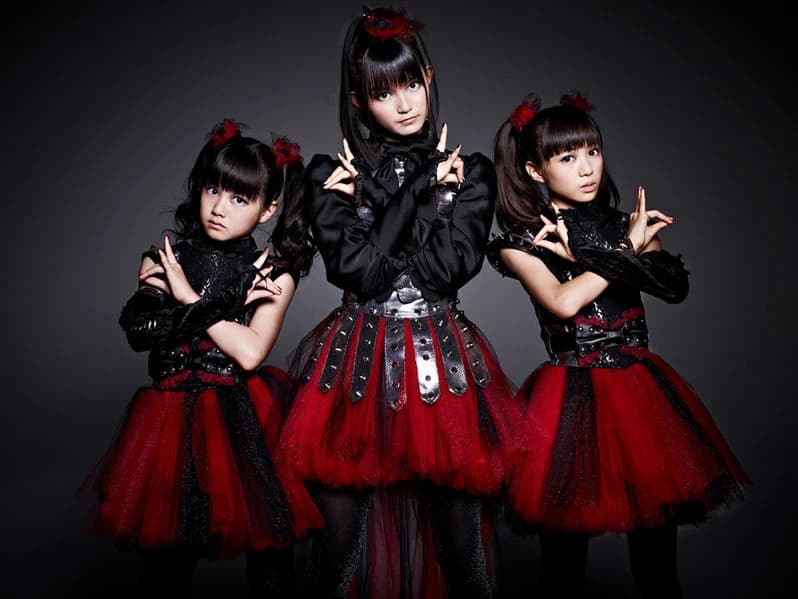
BABYMETAL was born in late 2010 as the Heavy Music Club within Sakura Gakuin, an idol school group managed by the same agency. That detail — often mentioned in passing — is central to understanding the magnitude of what came next. In its origins, BABYMETAL did not emerge from a metal scene, from a group of friends sharing heavy records, or from an inherited rock tradition. It emerged from almost the opposite place: idol training, choreographic discipline, luminous aesthetics, calculated stage performance, and the most codified Japanese pop culture. And that is precisely why the project turned out to be so disruptive.
Suzuka Nakamoto, Yui Mizuno and Moa Kikuchi were very young. What for other artists might have been a problem became an unexpected advantage in BABYMETAL. Because they did not carry the dogmas of classic metal, they could inhabit that territory without reverential fear. They were not trying to "protect" the purity of the genre — they were entering it from a different angle. That initial freedom was one of the keys to the phenomenon.
Behind this architecture was Kobametal, the producer and mastermind of the project. What was truly brilliant about Kobametal was not just mixing two seemingly incompatible worlds, but turning that mix into a coherent identity — with internal rules, symbols, silences, and a narrative that made it enduring.
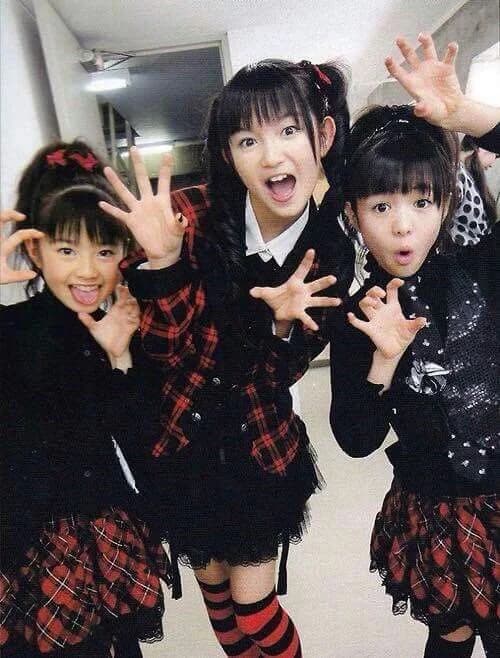
BABYMETAL in their early days as Sakura Gakuin's Heavy Music Club, 2010
The first songs: building their own grammar
With "Doki Doki ☆ Morning", the band started generating noise. Not just because of the strangeness of the mix, but because the song had something more important than weirdness: it worked. There was a hook, there was energy, there was a structure that broke expectations and, at the same time, was strangely addictive. For part of the Western audience, the first contact with BABYMETAL was a mix of fascination, mockery and bewilderment. The video was shared as a curiosity. But in that circulation, which many believed would be fleeting, something much more serious was germinating.
Then came songs like "Ijime, Dame, Zettai" and "Megitsune", decisive for consolidating identity. "Ijime, Dame, Zettai" was important because it showed the band could lean on an epic, almost crusade-like aesthetic while touching on a sensitive topic like bullying. It was not just visual impact — there was an underlying intention. "Megitsune", for its part, was key because it helped connect BABYMETAL with more traditional Japanese imagery: masks, ambiguity, theatricality, and an almost ritual dimension. That is where something fundamental became visible: the band did not want to be limited to being a strange hybrid between pop and metal. It wanted to build its own grammar.
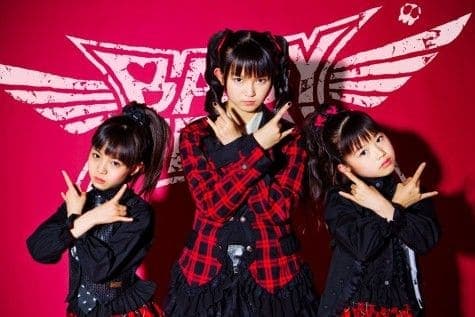
"Doki Doki ☆ Morning" (2011), the first single that introduced BABYMETAL to the world
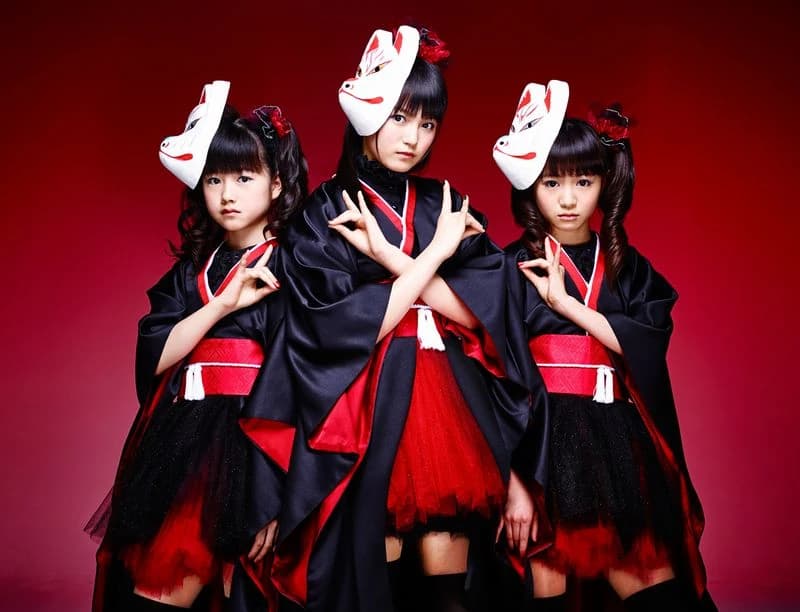 "Megitsune" incorporated traditional Japanese imagery into the band's visual universe
Nippon Budokan: the first great test
The great Japanese test came at the Nippon Budokan in March 2014, with the two nights Red Night and Black Night. Those shows were not important just because they took place on an iconic stage, but because they condensed everything BABYMETAL had built up to that moment. They were still very young, the pressure was enormous and so was the risk. A project like that could fail if the execution did not live up to the ambition.
But it did not fail. On the contrary — it came out stronger.
It is impossible to talk about Budokan without remembering Yui's accident, when she fell off the stage during "Headbangeeeeerrrrr!!!!!", and the injury Moa suffered shortly after. The decisive aspect of that moment is not just the accident itself, but what it exposed: that behind the striking aesthetics and apparent lightness lay a fierce work ethic. The way they continued the show consolidated an idea that would be central to their legitimacy from then on: BABYMETAL was not a pose. There was professionalism, discipline and genuine dedication to the stage. For countless fans, Budokan was the exact point at which the band stopped being a strange promise and became something serious.
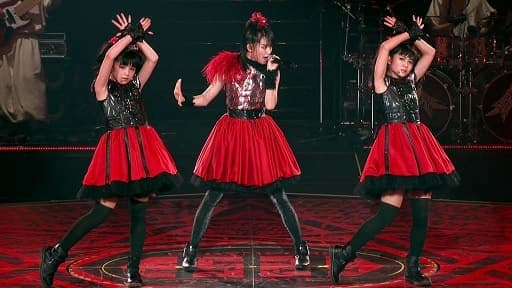
BABYMETAL at Nippon Budokan, March 2014. Red Night and Black Night